“To work concentratedly and do something that speaks truly to another man is a miracle.”
— Louise March
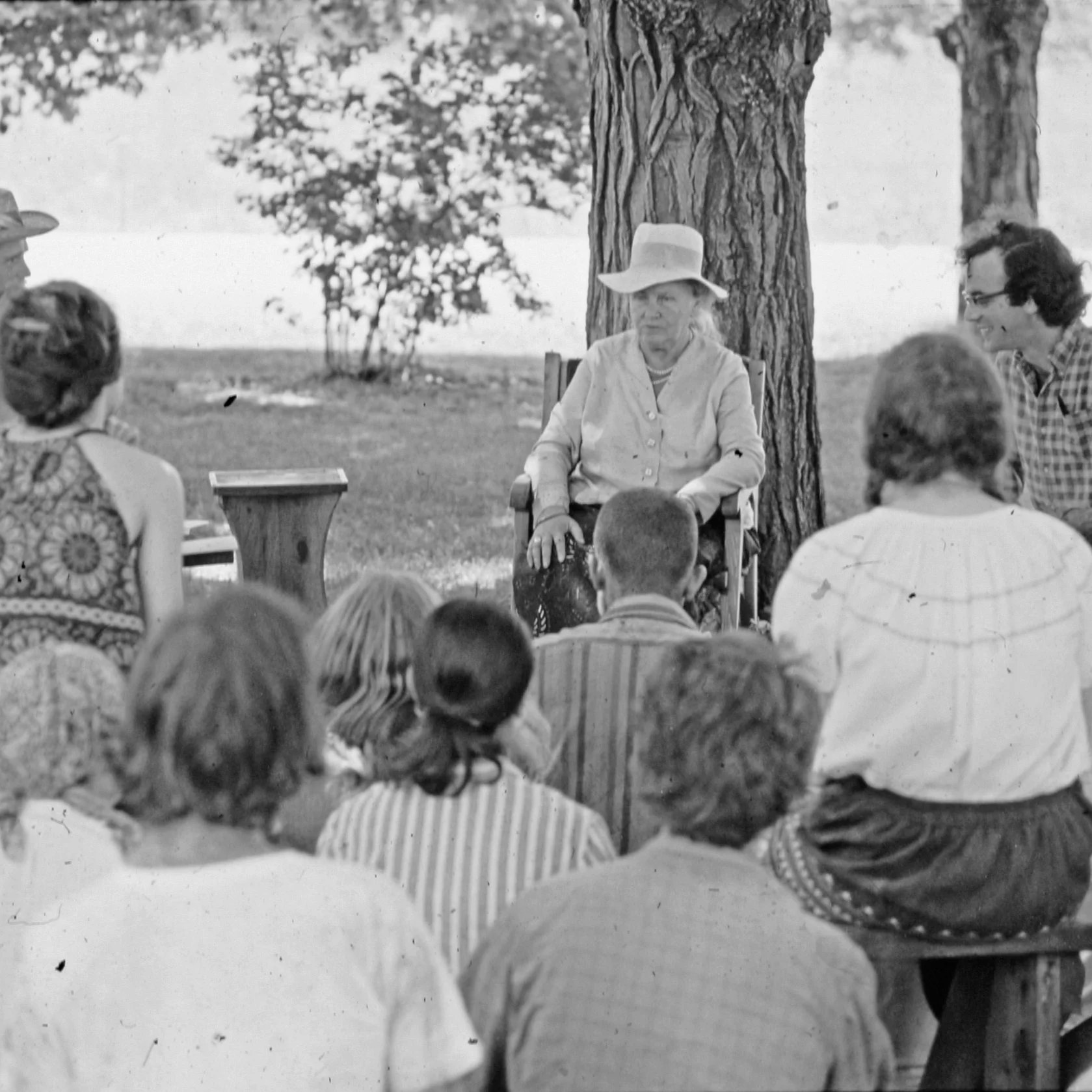
In 1957, Mrs. March began to visit Rochester, New York, where a handful of people interested in the ideas of Gurdjieff had been gathering. Under her direction, the group solidified its aim to explore man’s inner development, applying Gurdjieff’s ideas with practical emphasis on craftmaking and physical work activities. This marked the beginnings of the Rochester Folk Art Guild.
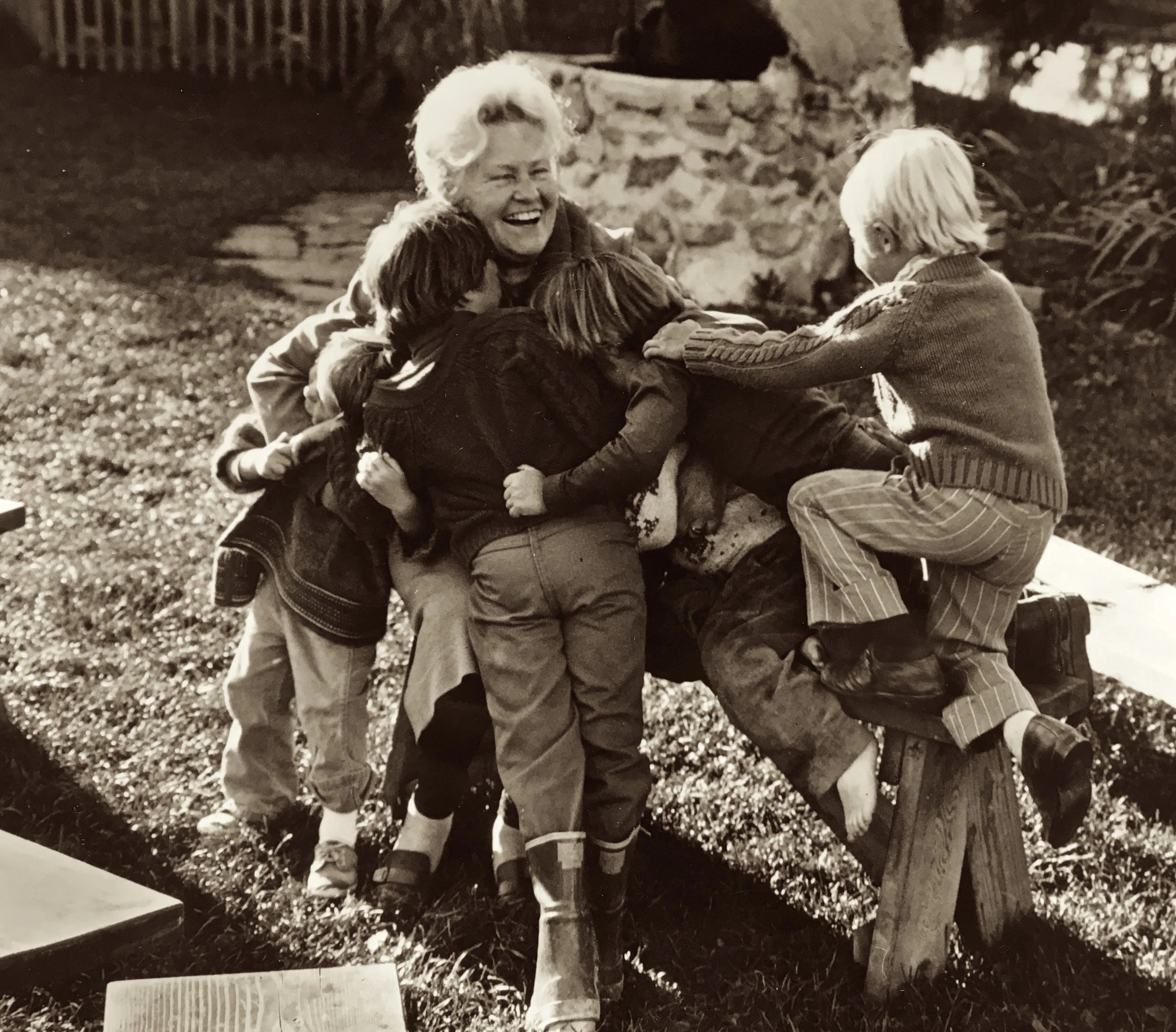
In 1967, Mrs. March and her pupils established a permanent home for the Guild at the 350-acre East Hill Farm in Middlesex, 45 miles south of Rochester in New York State’s Finger Lakes Region. Disciplined work in crafts and agriculture became a way of life for community members, many of whom started their own families at the Farm. Residences, craft shops and a Movements hall were designed and built with Mrs. March’s background in architecture and design a primary influence.
Mrs. March directed the activities of the Rochester Folk Art Guild and lived there until her death in 1987. Under her guidance the Guild grew to become a nationally recognized center for fine quality craftsmanship with work shown in museums, represented by fine craft galleries, and included in private collections worldwide. Now guided by a group of senior pupils, the Guild’s unique combination of craft work, community life, and the study of Gurdjieff’s teaching continues to attract people from all walks of life who are searching and questioning how to be truly human in today’s world.
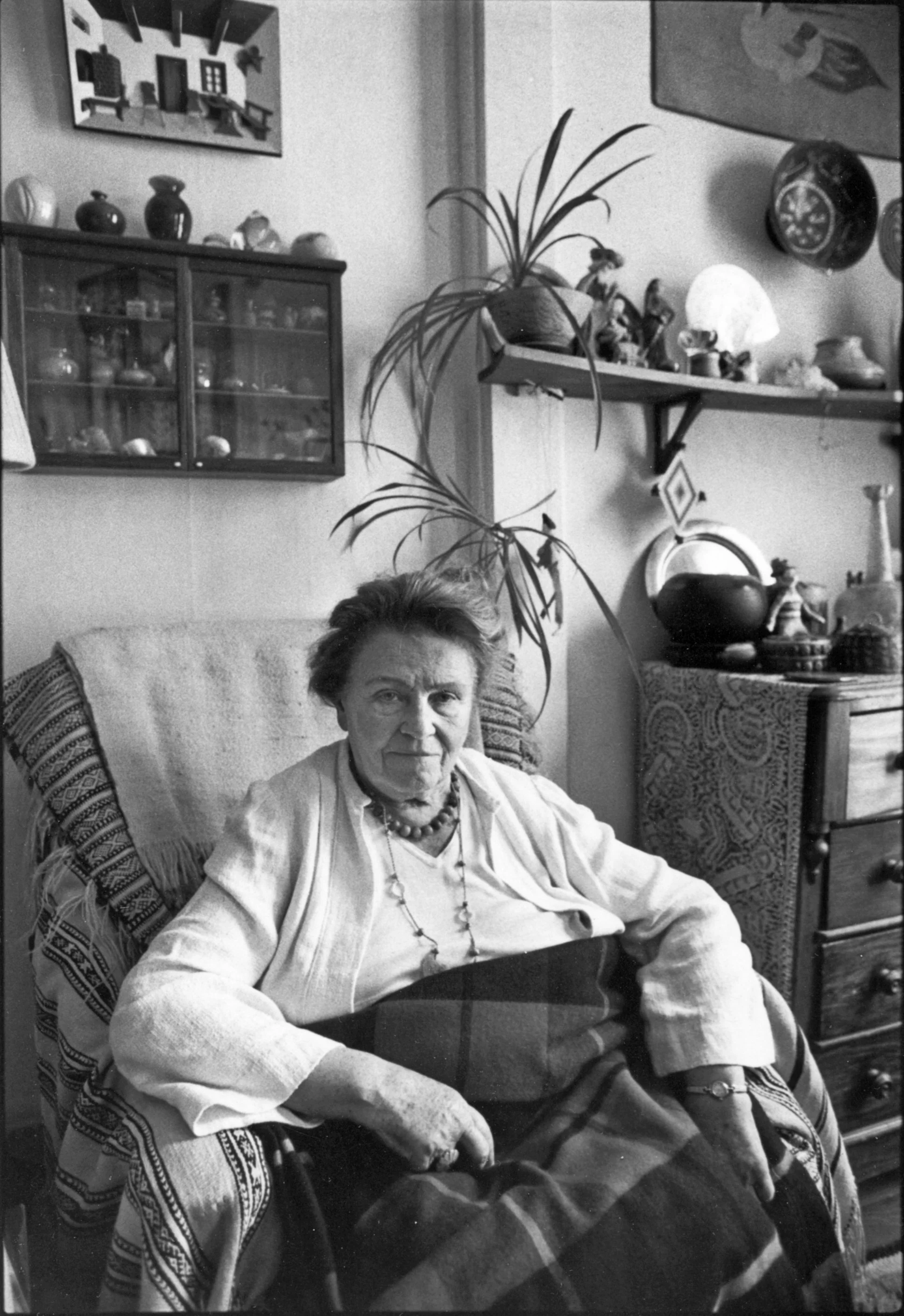
Louise March
Mrs. March was born Louise Goepfert in Switzerland in 1900. She spent most of her childhood in Germany, and studied art history at Berlin University. After coming to the United States as a graduate exchange student in 1926, she did further study in art history at Smith College. Soon afterward, she joined the faculty of the art department at Hunter College in Manhattan.
During her first years in New York, she met the renowned photographer Alfred Stieglitz and the painter Georgia O’Keeffe (who would become a lifelong friend). With their help, she took a job as manager of the Opportunity Gallery in Manhattan, and became established within a circle of artists, writers, and society people in New York’s cultural scene.
One evening in early 1929, she was invited to the studios of Carnegie Hall, where G. I. Gurdjieff was hosting a recital of piano music composed with his pupil, Thomas de Hartmann. Her encounter with Gurdjieff, followed by subsequent meetings during the weeks of his stay in New York, proved to be a turning point. By late spring, at Gurdjieff’s invitation, she traveled across the Atlantic to live and study at the Institute for the Harmonious Development of Man in Fontainebleau, France.
During this period, on a daily basis, Gurdjieff was immersed in the writing and revision of his seminal work, All and Everything: Beelzebub’s Tales to His Grandson. In addition to serving as his secretary, Miss Goepfert was given the task of translating Gurdjieff’s writings into German and preparing them for publication—roles she undertook with unflagging dedication and exactness.
Her close relationship with Gurdjieff would continue until his death in October, 1949. Not long afterwards, she wrote an essay which contains the following passage:
To me, as the only living German speaking disciple and translator of his writings into German, falls the task to point to Gurdjieff (even if only very inadequately) for all of my brothers who speak the same language.
After Gurdjieff closed the Chateau de Prieuré, Louise Goepfert remained in Europe. In 1933, she married Walter March, a German-American architect she had met in New York several years earlier. The two settled in Berlin until 1936, when sensing the impending psychosis of war, they relocated to the United States. By 1939, the Marches had purchased property in Bloomingburg, New York, where they raised five children, operated a full-time working dairy farm, and maintained close contact with the circle of Gurdjieff's American pupils.
“I realized that one cannot only talk philosophy … that one needs the whole man, so we started with the crafts.”
— Louise March, describing beginnings of the Rochester Folk Art Guild“Every human being is a speck in the universe. This makes us more modest—on our knees and open to higher influences.”
“When one enlarges one’s inner life, one finds an artist.”
— From an interview with Louise March“Developed man is beyond like or dislike. He serves such as he can with his small powers and short years on earth.”
“The first step is to ‘learn to listen,’ to wish to listen, to wish to drop the chaos in oneself in the same way that we drop the body at physical death. This step means that we won’t interfere any longer, will not change anything (in the beginning not even ourselves); that we will not quarrel, that we have no opinion to insist upon; that we will not translate what we hear into our automatic daily language—which would be equal to letting it go out the other ear. This step means that one stays quietly apart from the million-fold army of attacking thoughts and feelings and physical associations…”
— From her introduction to the German translation of the Tibetan Book of the Dead
“Vision is more than seeing. The two hang together. So we are like a tree standing in ourselves, and no one can help us except our own vision, our wishing to see. You can look backward to the beginning, from your birth on, through the different years of growing up and being in the middle of life. And you can turn to the other and now the second half, and know that it ends in death. The wish to make something with your life, to develop something that grows, that’s alive, that’s formed at the end is your goal. Your vision may see many mistakes you made, and that you’re going to make again—or not, if you have learned from the uselessness of the mistakes. So there where you stand inside yourself, life goes on. You cannot turn back. But you can have a different view as to what you wish to do with the rest of your days.
Here with all the crafts, including agriculture, you can wish to get to a perfection, to know the laws and to express something more than your own self. It shouldn’t be just an accident. It should be a vision: How large is the goblet or the cup. And these are reflections of yourself.
Doing this and many, many other things, we wake up a pathway in our brain: The most mysterious and misunderstood part of man is his brain. And every effort, physical and mental, rubs these fine strings to come on and wake. Sitting, right sitting, does it in an extreme. But besides that it needs work, the whole body, from toe to hair, every part.”
From a talk on vision, given July 11, 1983
“Certain qualities that should be characteristic of man may be lacking, such as awe, gratitude, reverence… I think the whole American culture is shy of feeling, afraid of feeling and afraid of suffering, which belongs to life. The moderns try to shut it out, and they suffer all the more.”