
Apprenticeships

Guild apprenticeships are designed for people seeking a practical, hands-on approach to the study of craft. They are best suited to people who are curious, eager to learn, willing to take direction, and interested in developing their skills through sustained work alongside experienced craftspeople. Apprentices also contribute to the shared work of the shop and the wider Guild community.
Apprenticeships are currently available in Pottery, Weaving, and Woodworking, with both commuter and residential options.






Apprenticeship & Education
The Folk Art Guild offers apprenticeships in pottery, woodworking, and weaving for people interested in learning and practicing craft through sustained, hands-on work in a working studio.
Each of our shops has its own character, methods, and approach to teaching. Opportunities are arranged individually and depend on the interests and experience of the applicant, the current work of the shop, and the capacity of Guild craftspeople to take on an apprentice.
Apprenticeships may be part-time or full-time for commuters, with residential options available for full-time apprentices.
Working & Learning
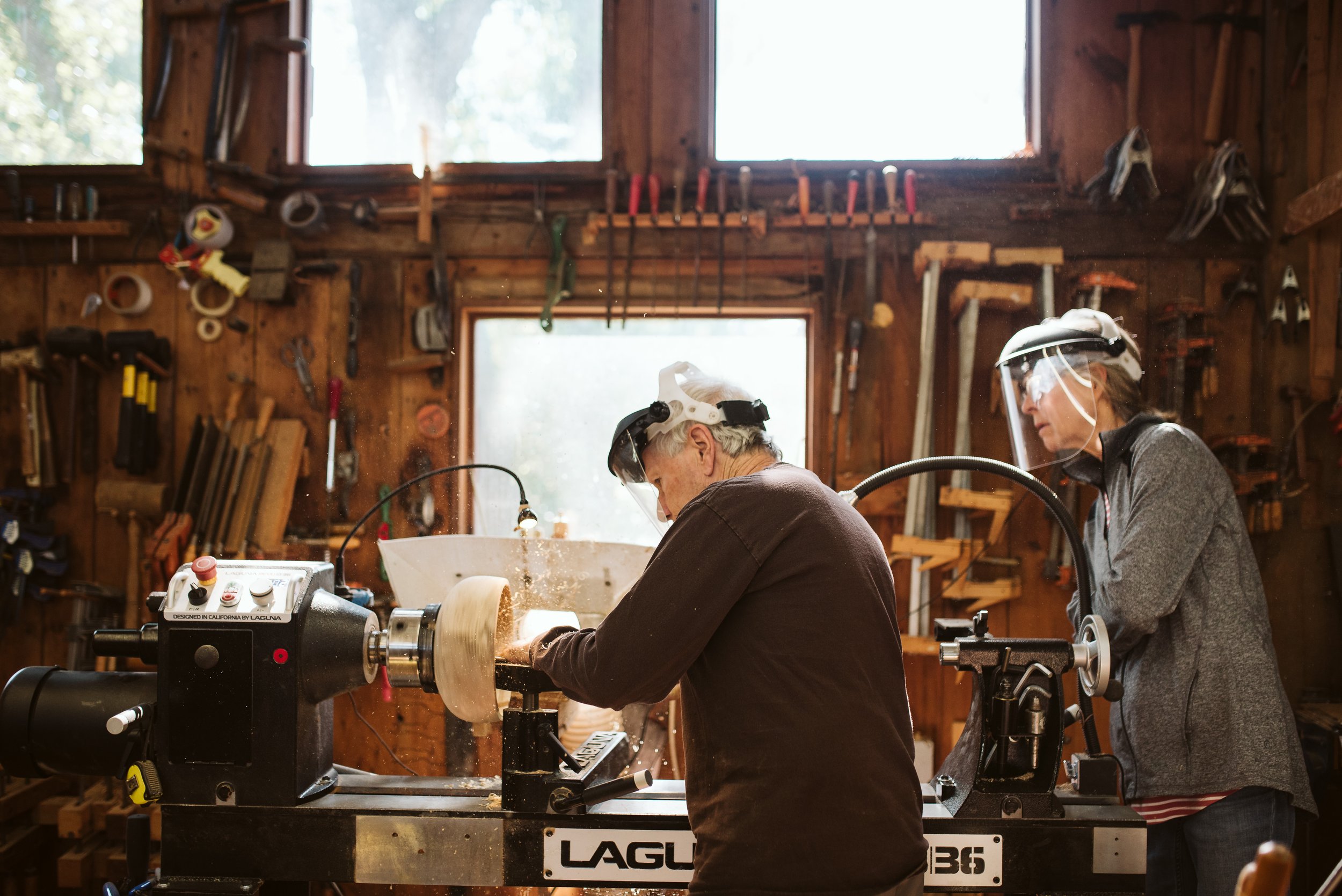
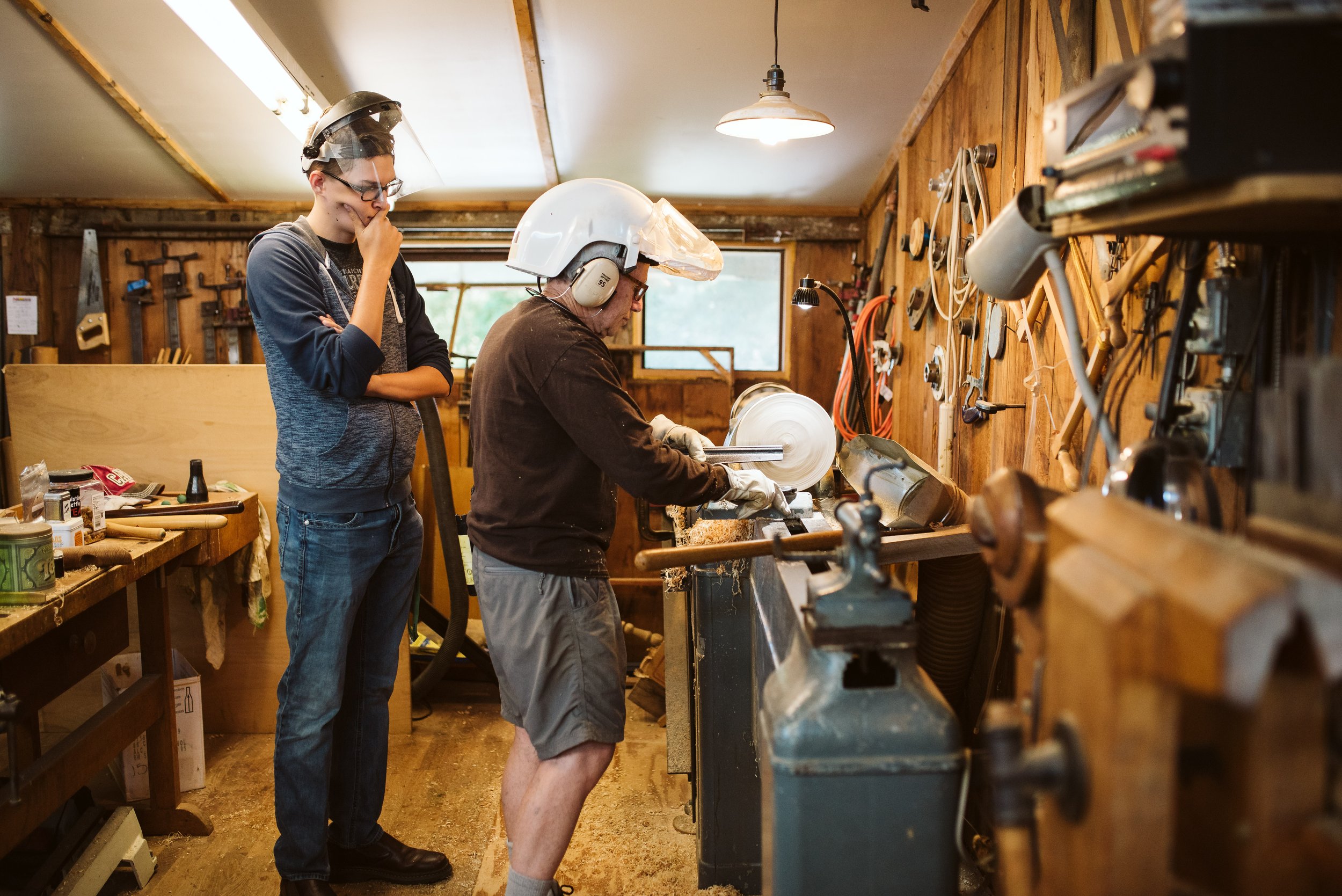
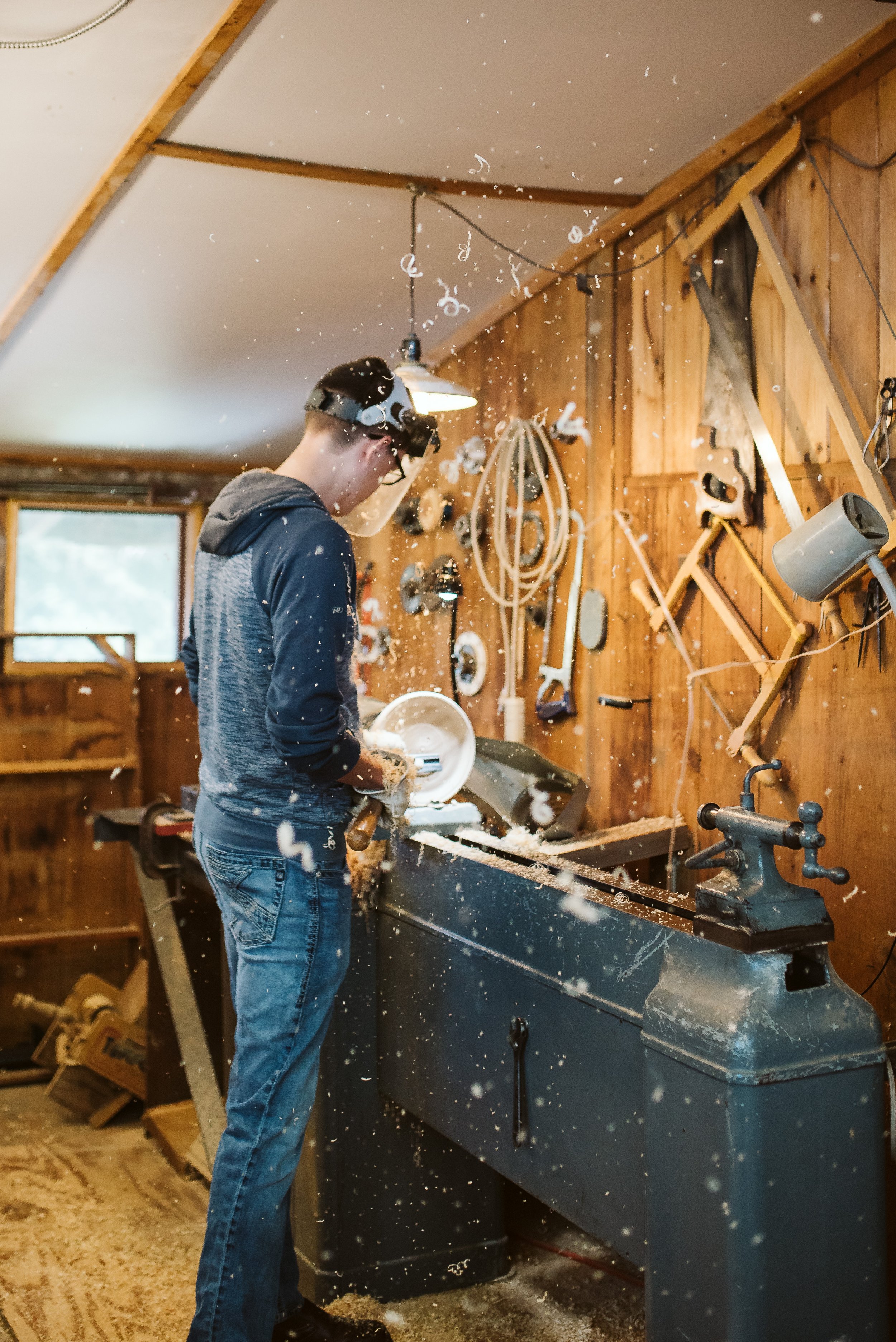
Apprentices learn by working alongside experienced Guild craftspeople and taking part in the life of a working shop. The experience varies by craft and by individual, combining hands-on learning and practice with helping in the shop where needed.
This might include preparing materials, caring for tools and workspaces, assisting with production, sales, workshops, or events, and learning some of the practical aspects of running a craft shop.
Each shop has its own character and way of working, but throughout the Guild we value fine craftsmanship, focused work, curiosity, and a willingness to learn and contribute.
Community Life
Apprentices are invited to take part in the daily life of the community, sharing in meal preparation, cleaning, property maintenance, farming, and gardening, as well as the seasonal celebrations, public sales, and numerous other special events. Study of the Gurdjieff teaching is available but not required. Participation in this side of Guild life is up to each individual.
-
If you’re interested in an apprenticeship, email info@folkartguild.org. Tell us a little about yourself, your experience, and what you hope to learn.
Resumes, work samples, and letters of reference are welcome.
Trial visits and tuition fees are arranged before any final decision is made -
Guild apprenticeships are awarded after a series of trial visits. Most shops require a commitment of at least one year.
Availability and starting dates vary by shop.
The first visit is typically for 2 or 3 days; subsequent visits of 2-3 weeks are arranged if mutually desired by the applicant and the studio director.
A final decision is made based on these visits. Apprenticeships can be renewed annually for up to three years at the discretion of the Guild community and studio director. Evaluation of progress in both craft and community life is done on a regular basis.
-
Some apprentices live full-time at the farm, while others live nearby and participate on a full- or part-time basis. Fees vary depending on the individual arrangement.
For residential apprentices, the initial visit is typically $40/day, followed by $175/week for a longer trial visit. Long-term residential apprentices generally pay about $600/month toward living expenses, craft training, and materials.
Non-residential apprenticeship fees vary by shop and individual arrangement.
A limited number of scholarships are available each year.




Pottery Programs
Pottery Apprenticeship
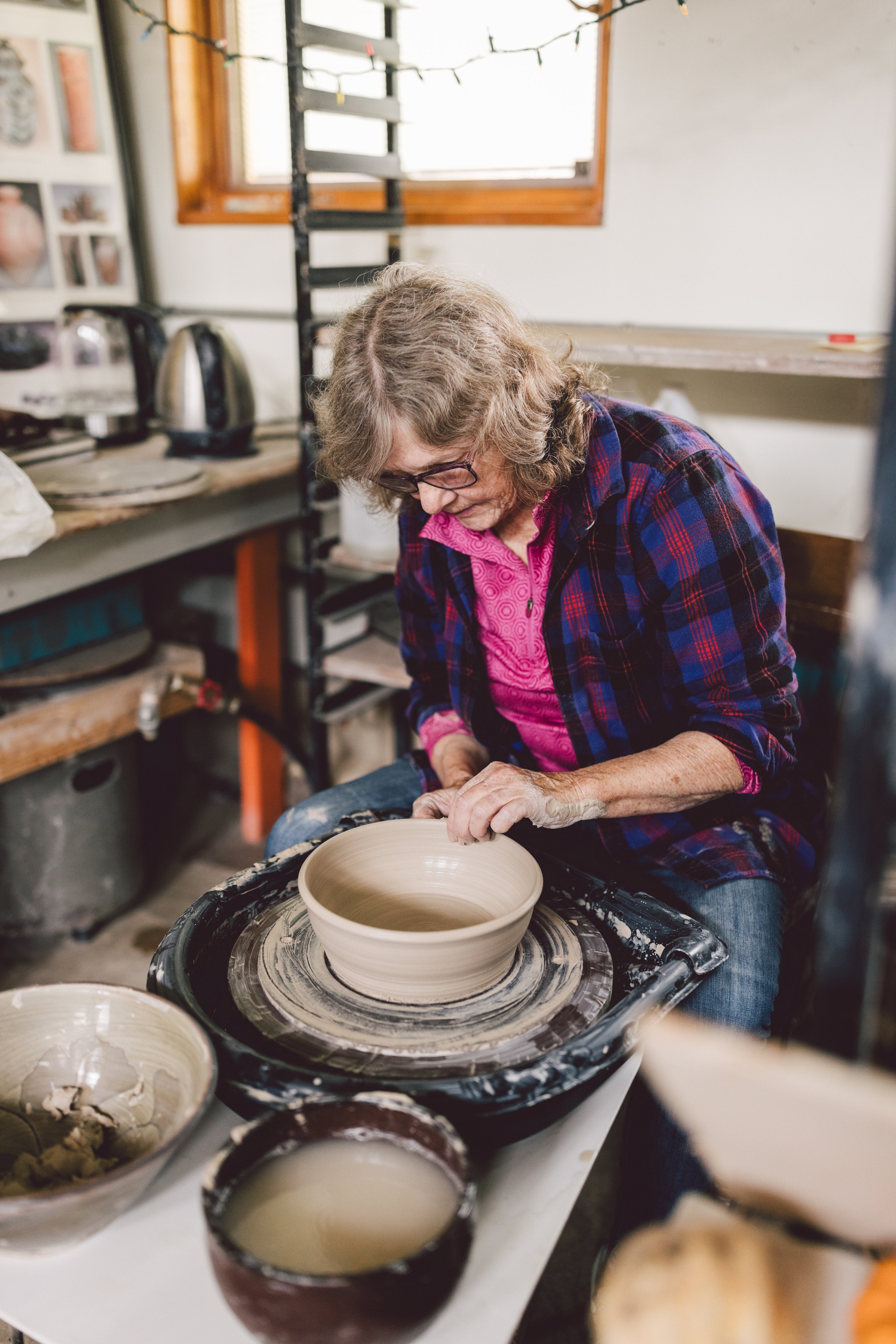
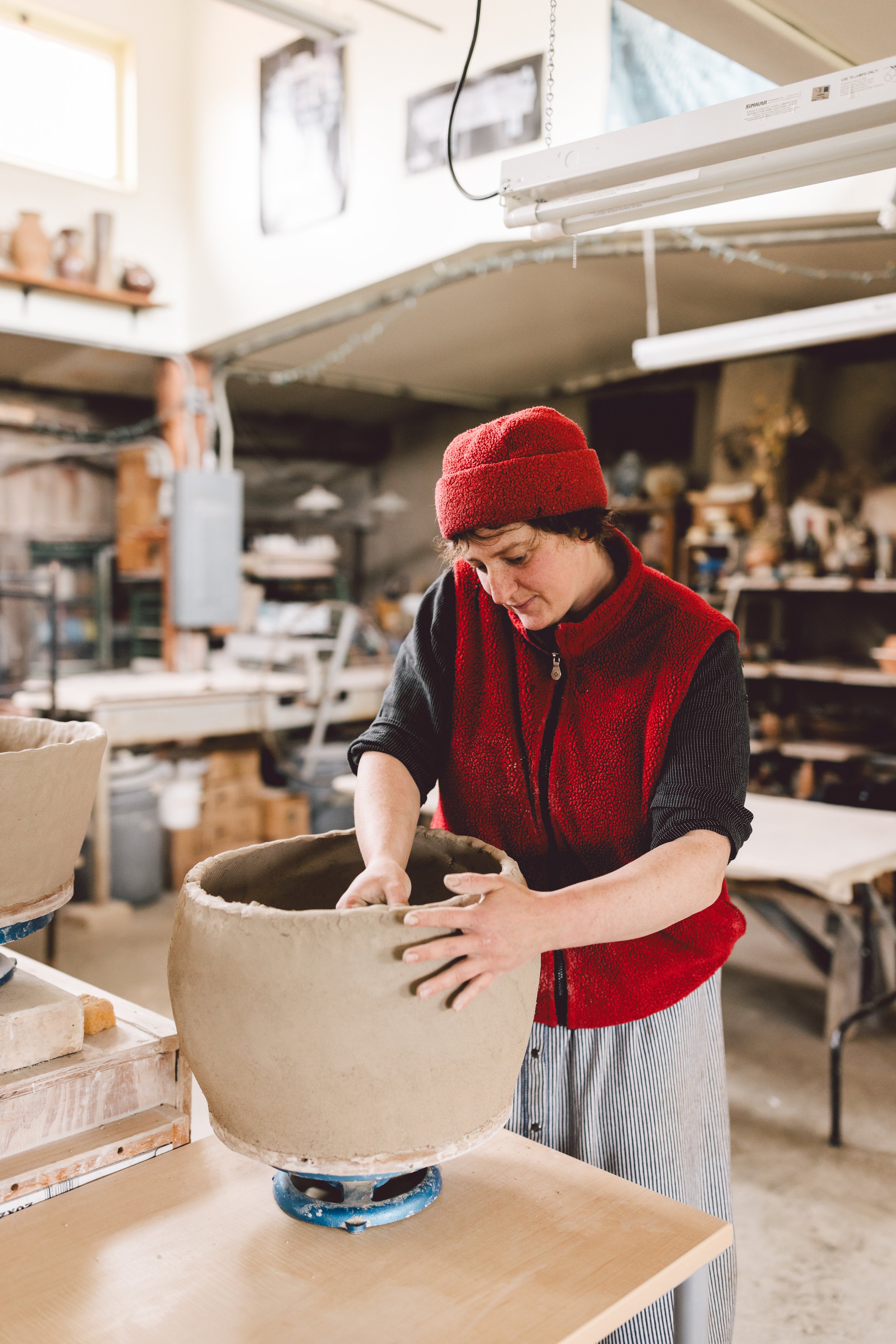
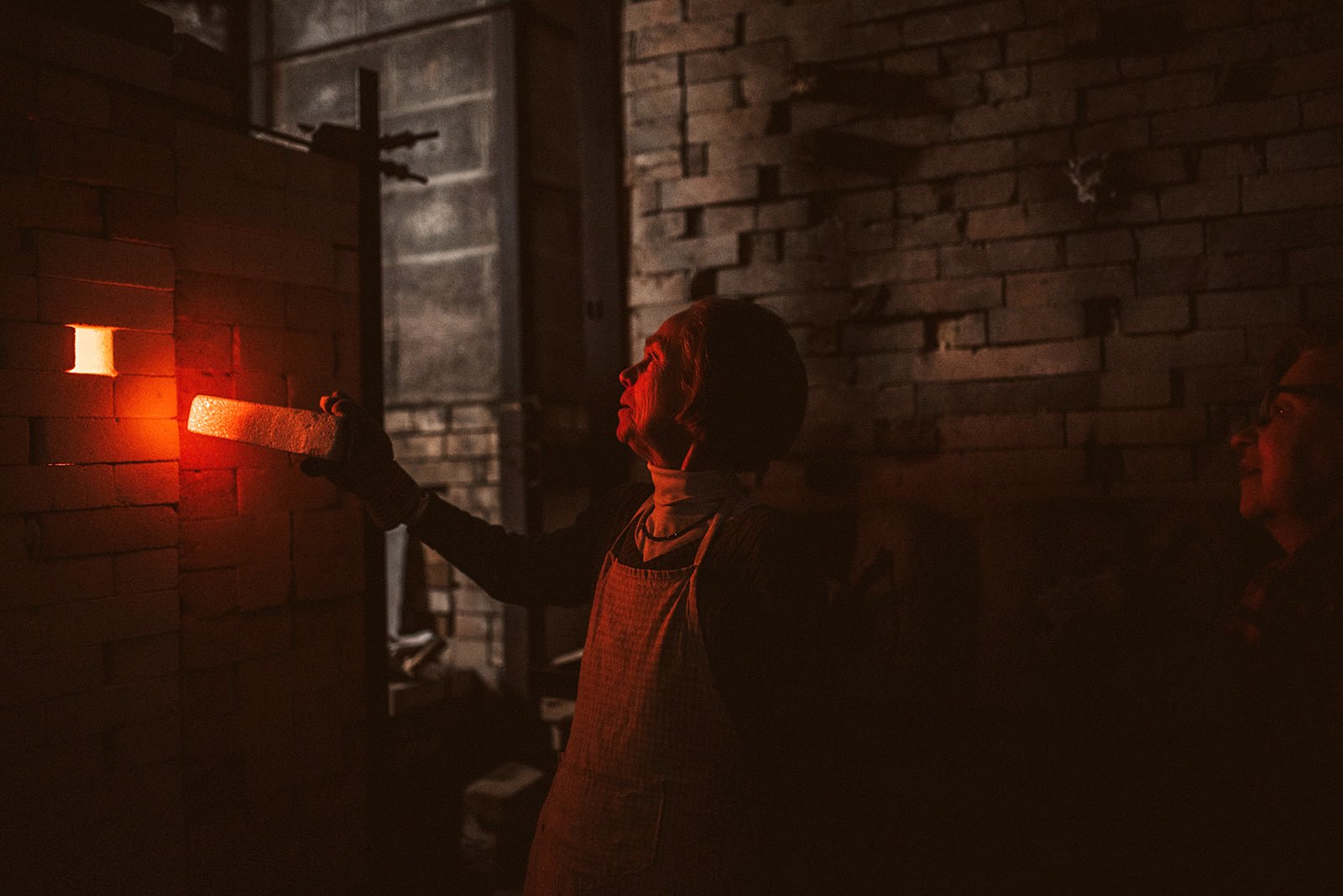
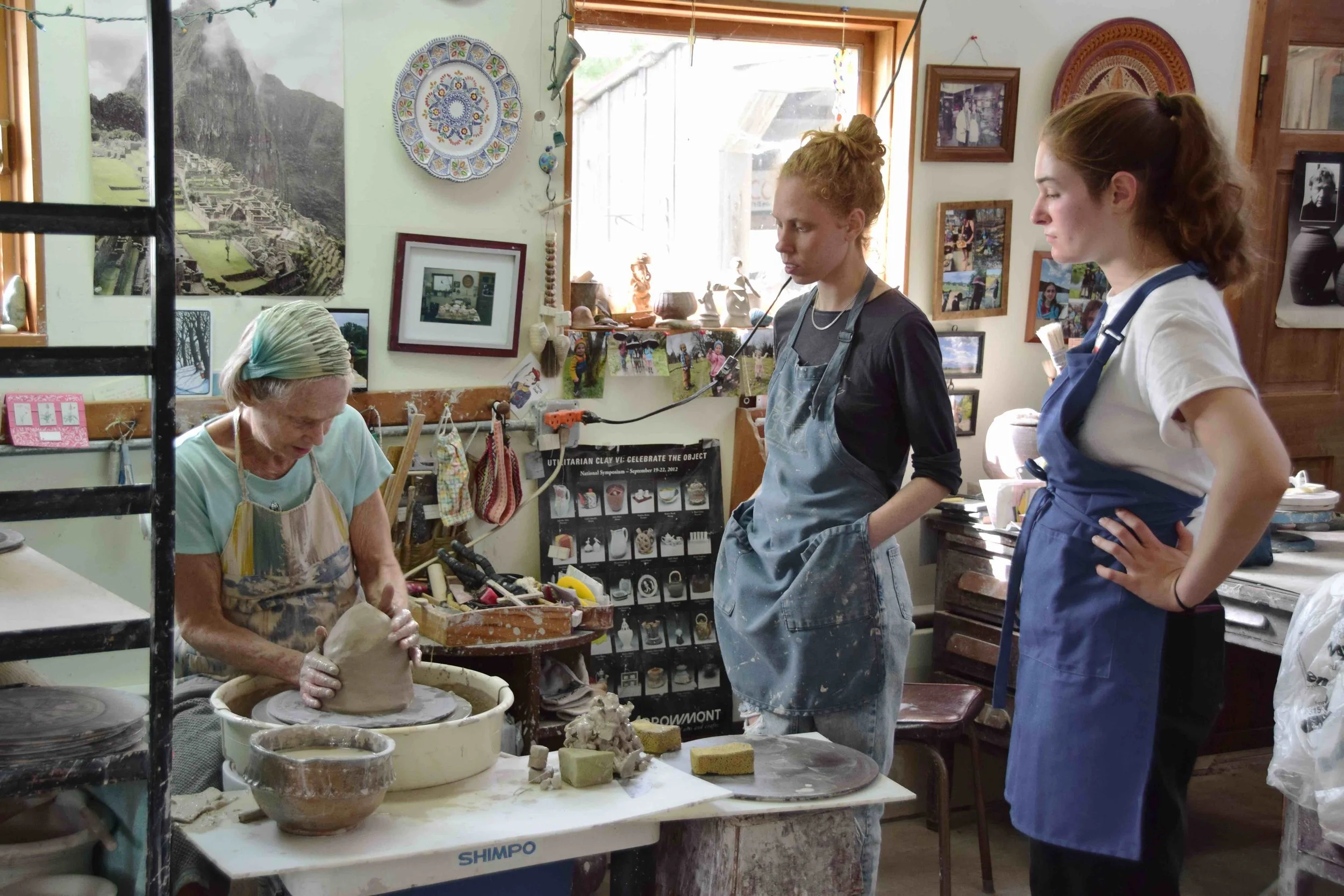
Our pottery apprenticeship program has a more in-depth aim than lessons. Learning skills in pottery follows a slow progression over the apprenticeship and includes making clay, wedging, hand building, and throwing repetition ware. At the beginning, apprentices are not expected to produce saleable work, but help with studio chores such as cleaning, loading and unloading kilns, mixing glazes, building fires, and packing pots for shipping.
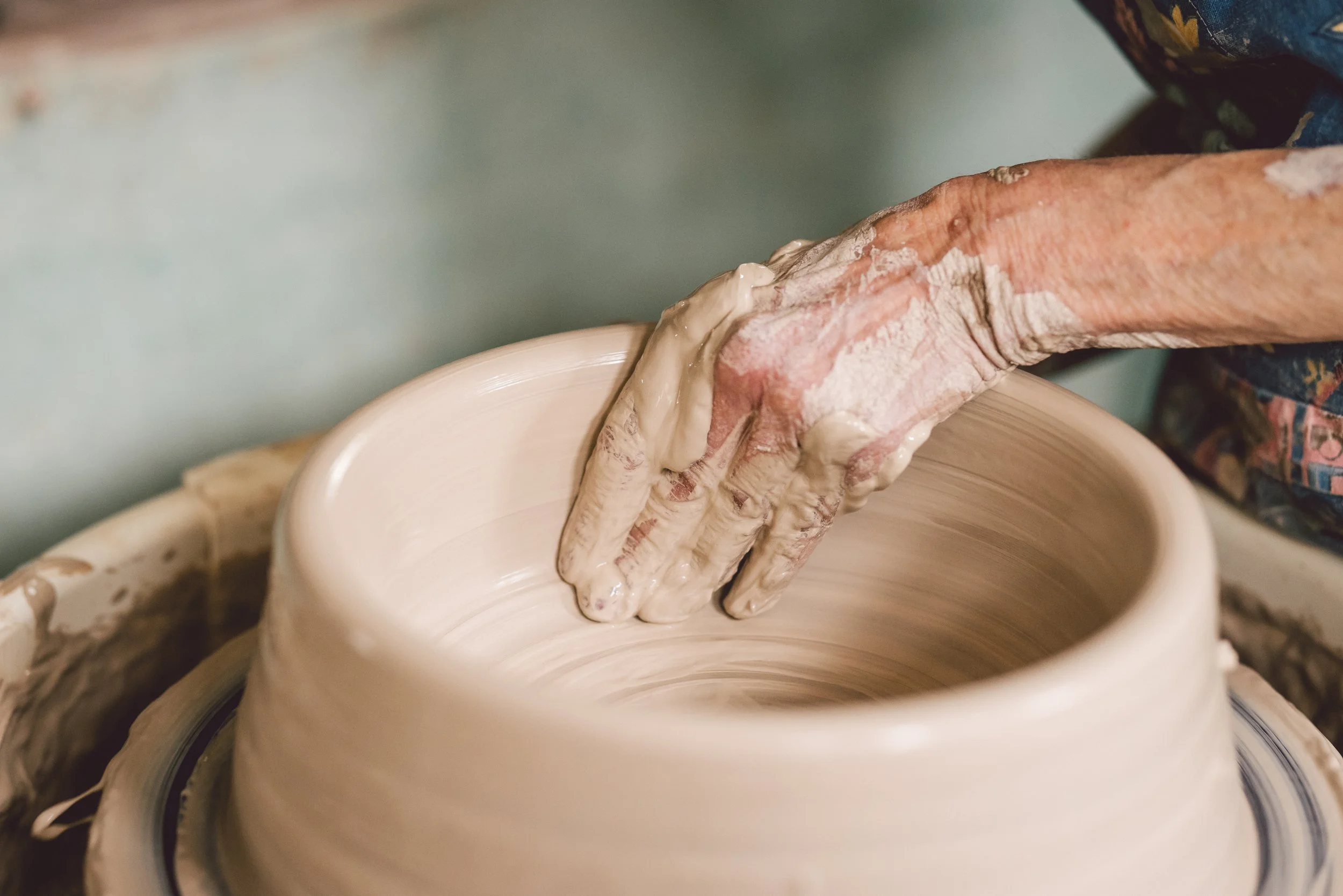
Once an apprentice learns to throw, they are encouraged to make multiples of 50 to 100 mugs, bowls, and other production items. There is a magical point that occurs in repetition throwing. When the body learns to shape the clay, the feelings are alive and engaged, and the mind is free to join the search for a better form, a more relaxed body, and a finer attention. This attention aids the process of becoming present and alive in all one's parts. Often the pots grow more and more beautiful as a result, in a natural process like a plant reaching for the sun. There is also a great deal of freedom to pursue shapes, sizes, and function in many kinds of pottery.
Beginners are encouraged to throw out and reclaim their early attempts and later to glaze and fire their more successful pots in order to understand the process from beginning to end. The standards for saleable work are high, but functional pottery is needed and appreciated in the community kitchen.
Pottery Residency
For functional potters with more experience, this same opportunity to work and learn in the pottery shop may take the form of a Pottery Residency, with more independence to pursue their own work. The Residency Program gives developing potters the experience of participating in a working studio before investing in their own equipment, while for established potters it provides the opportunity to work in a different setting.
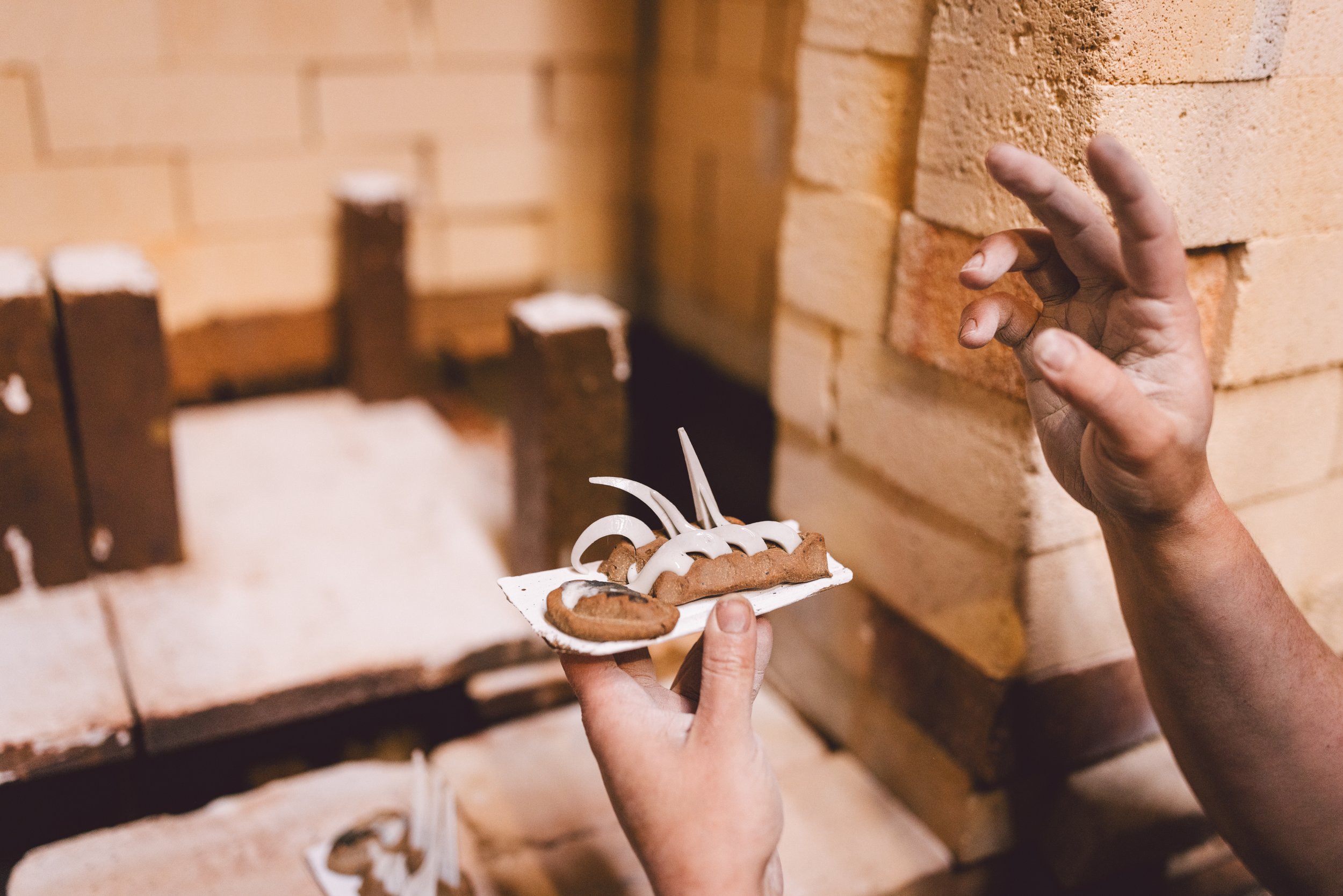
Pottery Resident Artists receive studio space, materials, and firing in our high-fired reduction propane gas kilns (porcelain clay is extra) in exchange for 15 hours of studio support work per week. Studio support includes clay and glaze making, loading kilns, cleaning, and throwing for the Guild's production line of pottery. In exchange for assisting during Guild exhibitions and shows, the resident potter's own work can be displayed and sold during the show.
While the residency is designed for a functional potter, the wish to contribute in a caring way to life in a community of craftspeople is more important than achieved skill level in pottery. Interest in or participation in the opportunity to study the ideas of G.I. Gurdjieff at the Guild is completely voluntary. Being sensitive to this inner search by others who live and work at the Guild is important for participating in all educational programs at the Guild.